Start With the Equipment You Have
Whole-house filters and under-sink RO systems have different service needs. Even similar-looking housings may use different cartridges, seals or operating requirements.
Useful details include:
- Manufacturer and model
- Filter or membrane part numbers
- Approximate installation age
- Last known service date
- Current symptoms
- Any connected refrigerator or other outlet
- Property location
If labels are missing, mention that when calling. Avoid buying parts based on appearance alone.
Whole-House Filter Maintenance
Cartridge Replacement
The correct cartridge needs to fit the housing and serve the intended treatment purpose. Dimensions alone do not establish compatibility.
Tank-Based Filter Service
Tank systems may involve media, controls or operating requirements rather than simple cartridge changes.
Pressure and Flow Review
Reduced flow can have several causes. Review the filter's condition and the wider installation before assuming replacement will resolve the problem.
Treatment Performance
Maintenance should support the selected equipment's documented function. A clean-looking filter does not establish that every treatment claim remains effective.
RO Filter and Membrane Service
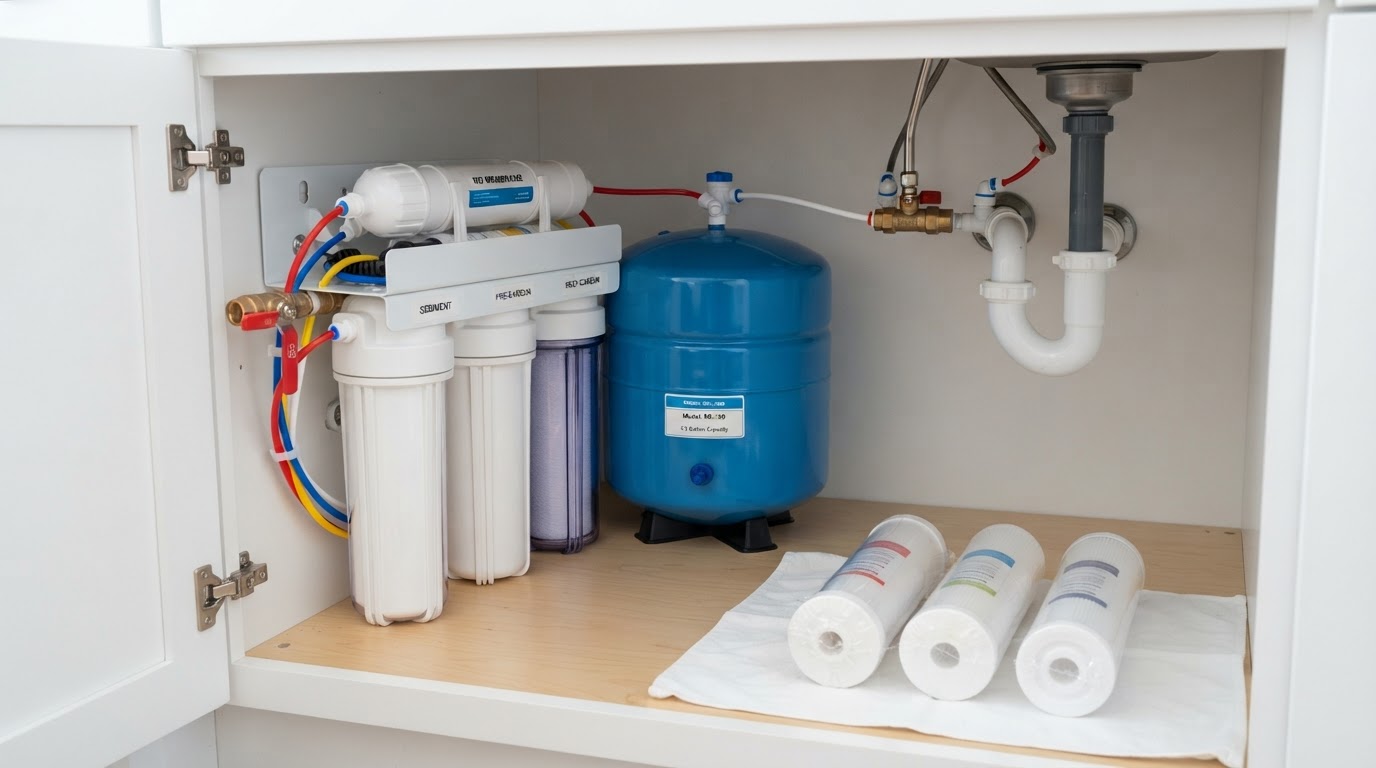
An RO system commonly has several treatment stages, with different service requirements.
Identify the correct:
- Prefilters
- Membrane
- Postfilters
- Optional mineral stage
- Seals and other service components
Follow the model's procedures for replacement, flushing and any specified cleaning or sanitizing. Not every stage needs replacement at the same interval.
Confirm the parts and work included in the proposed service.
Slow Output, Changed Taste or Unusual Operation
Slow Drinking-Water Delivery
Filter condition, supply conditions, storage and other components may affect delivery. A slow faucet is a symptom, not a complete diagnosis.
Taste Changes
Review when the change began, maintenance history and any optional mineral stage. Taste preference alone does not establish whether water is safe.
Leaks
The cause may involve tubing, fittings, housings or other parts. A routine filter change should not be assumed to repair an unrelated leak.
A System That Has Been Unused
If equipment has been inactive, review the manufacturer's recommissioning instructions before returning it to service.
How Often Should Filters Be Changed?
There is no single schedule for every home and system.
Intervals depend on:
- Equipment instructions
- Incoming water conditions
- Water use
- Filter capacity
- Operating symptoms
- Applicable performance checks
A calendar reminder can help, but it should be based on the selected equipment's requirements. Do not publish a universal six-month or annual schedule.
Compatible Parts and Long-Term Serviceability
Ask whether replacement parts are standard, proprietary or discontinued.
Using an unsuitable cartridge or membrane can affect fit, operation and documented performance. Confirm the specific replacement rather than assuming an online listing is equivalent.
If parts are no longer available, compare practical servicing options with system replacement.
What Should a Maintenance Quote Include?
Ask whether the proposed service covers:
- Equipment identification and inspection
- Specified replacement parts
- Labor
- Model-required cleaning or sanitizing
- Flushing and startup
- Leak and operating checks
- Additional repairs
- Disposal of replaced components
- Future service recommendations
Separate routine maintenance from repair work. Ask about any additional charges before authorizing extra work.
Performance Checks Have Limits
A dissolved-solids reading can be one RO operating indicator. It does not establish that every substance has been reduced or that water is safe in every respect.
Checks should match the equipment's function and the concern being investigated. Specific water-quality questions may need targeted testing.
Maintenance for Irvine Homes
For equipment inherited with a home in Woodbridge, Northwood, Westpark or elsewhere in Irvine, start with identification and available service records.
For rentals or attached properties, clarify ownership and responsibility before arranging work. Shared plumbing and access may affect the service plan.
Call with your location and model to check availability.
Turtle Rock RO Maintenance: Example Project
Illustrative project scenario.
The Homeowner's Problem: The Drinking-Water Faucet Has Slowed Down
Consider a homeowner in Turtle Rock whose RO faucet used to fill a glass quickly but now delivers a weaker stream. After filling a few bottles, the homeowner also notices a longer wait before more water is available.
They cannot remember the last filter change and want to know whether routine service will resolve the problem.
Slow delivery does not automatically mean the membrane has failed. Filters, supply conditions, tubing, valves and the storage tank all need consideration.
The Starting Setup
For this example, assume:
- The kitchen has a conventional tank-style under-sink RO system
- The equipment model can be identified
- Filter housings and shutoffs are accessible
- The homeowner can authorize servicing
- Replacement-part compatibility can be checked
No particular brand, filter age or failed component is assumed.
A tankless system would require a different assessment.
The Assessment: Separate Delivery Flow From Water Production
Start by asking when the flow slows.
Is it weak immediately after the tank has had time to refill, or does it slow only after several glasses? Did the change happen gradually or suddenly?
Review:
- Exact system model
- Filter and membrane service history
- Feed-water supply and pressure
- Shutoff and valve positions
- Kinked or restricted tubing
- Faucet operation
- Storage-tank condition
- Leaks and drainage behavior
Tank delivery and membrane production are different functions. The assessment should identify which part of the system is limiting performance.
Any tank-pressure check or adjustment must follow the model's service procedure. Do not apply one generic pressure setting to every tank.
The Proposed Solution: Service the Confirmed Cause
If the assessment identifies overdue or restricted filters, the proposed service would use replacements compatible with the exact system.
Membrane replacement would be included only when its condition, performance or applicable maintenance instructions support it.
If the problem involves the tank, supply, faucet or tubing, filter changes alone may not resolve it. Explain those findings before adding work.
For an APEC RO-90, for example, replacement selection should follow its current model documentation. Do not assume parts labeled "five-stage RO" fit every five-stage system.
The named model is an educational reference, not a claim that this scenario involved an actual RO-90 installation.
Parts, Materials and Service Tools
The work order should identify:
- Exact compatible prefilters and postfilter
- Membrane, if replacement is justified
- Housing seals or O-rings, if required
- Manufacturer-approved servicing materials
- Replacement tubing or fittings, if needed
- Tank or faucet components, if diagnosed
- Applicable housing wrench and service tools
A pressure gauge may help assess supply or tank conditions using the appropriate procedure.
A conductivity or TDS reading may support an equipment-performance check, but it does not establish drinking-water safety or replace targeted testing.
How the Maintenance Would Proceed
- 1
Record the symptoms.
Review flow changes, refill behavior, equipment details and service history.
- 2
Diagnose the restriction or fault.
Check the supply, valves, tubing, filters and tank according to the model's instructions.
- 3
Confirm the service scope.
Identify replacement parts, additional repairs, charges and exclusions before work begins.
- 4
Service the equipment.
Isolate and depressurize the system as required. Replace the authorized components and perform any manufacturer-required cleaning or sanitation.
- 5
Complete startup and flushing.
Follow the exact equipment and replacement-part instructions. Do not use a universal flushing quantity or refill time.
- 6
Check operation.
Inspect serviced connections for leaks. Evaluate faucet delivery, refill behavior and any applicable equipment-performance measurements under documented conditions.
- 7
Explain future care.
Record installed parts and the next service requirements. Show the homeowner the shutoff and explain symptoms that warrant another call.
What the Estimate Would Include
| Estimate item | Scope to confirm |
|---|---|
| Assessment | Diagnostic work and any separate service-call charge. |
| Filter replacements | Exact compatible cartridges and included quantities. |
| Optional membrane replacement | Reason for replacement and compatible part. |
| Additional repairs | Tank, faucet, tubing or valve work supported by the findings. |
| Service labor | Component replacement and required cleaning or sanitation. |
| Startup and checks | Model-specific flushing, leak checks and operating checks. |
| Taxes and exclusions | Clearly identified charges and work outside the proposal. |
Ask whether the quoted filter service includes all required stages or only selected cartridges.
This example does not establish a fixed maintenance price. The system model, parts and diagnosed work determine the proposal.
What Could Change the Price?
Additional work may be needed if:
- The system uses proprietary cartridges
- Compatible parts are difficult to obtain
- Housings or seals are damaged
- The tank or faucet also needs attention
- Cabinet access is restricted
- Supply-pressure problems require separate work
- Previous modifications complicate servicing
Compare a repair proposal with replacement only after the equipment's condition and supported service options are understood.
The Intended Result and Follow-Up
The intended result is restored operation where the diagnosed condition can be corrected.
Completion notes should identify the parts replaced, checks performed and any remaining limitations. This example does not claim an actual service visit or supply invented readings.
Filter and membrane schedules depend on the model, water conditions and use. A calendar reminder helps, but a change in performance may warrant attention sooner.
New taste or odor concerns should receive their own assessment rather than being dismissed as a routine filter issue.
Inspection Gallery: Mineral Buildup & Filter Wear
Genuine component photographs taken during water system and plumbing inspections. Captions describe visible conditions only.
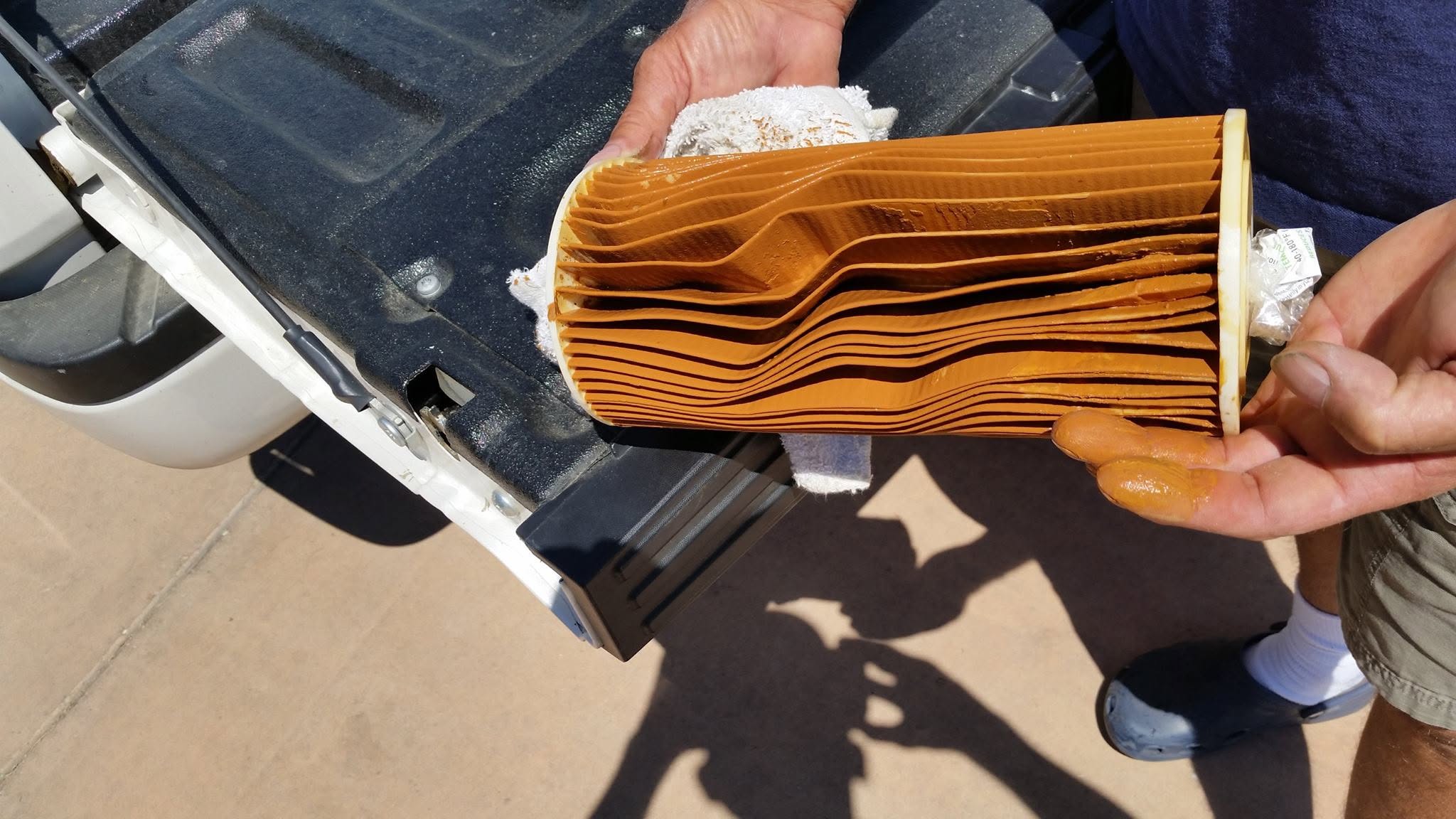
Severely Fouled Pleated Sediment Filter Cartridge
Spent pleated sediment filter cartridge saturated with heavy iron and particulate buildup, inspected following removal from service.
Inspected wear item — routine cartridge replacement.
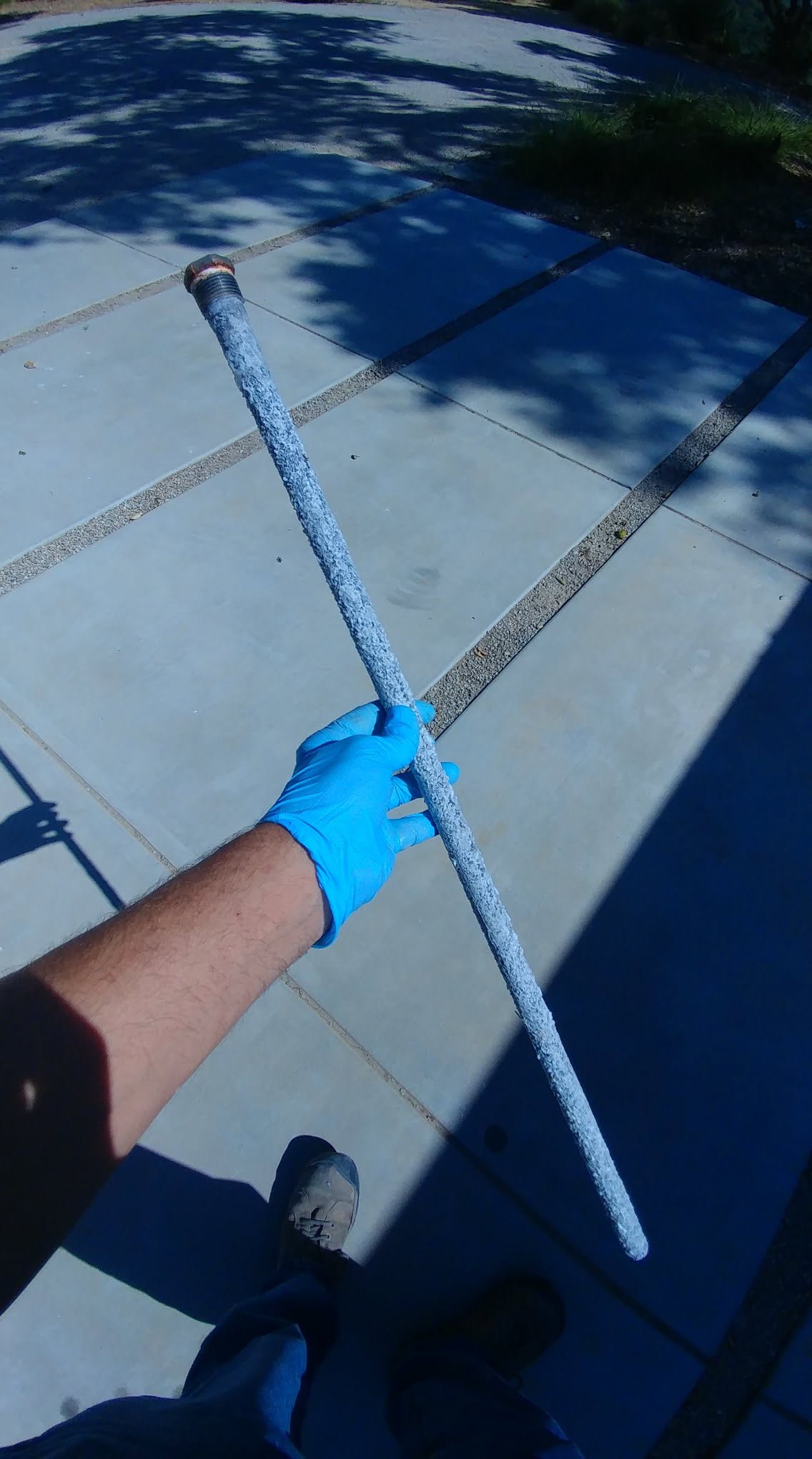
Corroded Water Heater Sacrificial Anode Rod
Removed sacrificial anode rod demonstrating extensive mineral encrustation and sacrificial metal depletion caused by untreated hard water exposure.
Inspected wear item — tank inspection photo.