Identify the Problem Before Replacing the System
A change in water quality does not automatically mean the entire softener has failed.
The issue may involve settings, controls, the brine system, resin condition or another part of the installation. Changes in incoming water or household demand can also affect how the equipment performs.
Confirm the cause before buying replacement equipment or ordering parts.
Common Reasons Homeowners Ask About Repair
Hard-Water Signs Have Returned
Deposits or spotting can prompt a performance check. Compare untreated and treated hardness rather than relying on appearance alone.
Salt Use Has Changed
Unusual salt consumption or an apparently inactive brine system needs investigation. A visible salt level does not establish that regeneration is working correctly.
An Error Message Appears
Record the exact message and equipment model. Error codes and troubleshooting procedures differ by manufacturer.
Water Is Leaking
Identify where the water appears and whether it is continuous. A leak may involve a connection, valve, housing or another component.
Flow or Pressure Has Changed
Review when the change occurs and whether it affects the entire home. The cause may extend beyond the softener.
The System Runs Differently
Unexpected sounds, repeated cycling or a changed schedule should be compared with the model's normal operation.
Do not present these symptoms as definitive diagnoses.
What Information Helps With a Service Inquiry?
Have these details ready when calling:
- Brand and model
- Approximate installation age
- Exact symptom or error message
- When the problem started
- Previous service or repairs
- Whether other treatment equipment is connected
- Any recent settings or plumbing changes
- Property location in Irvine
If the equipment came with the home, say which details are unknown. Do not guess its service history.
What a Diagnostic Assessment Should Review
Incoming and Treated Water
Appropriate measurements can help determine whether hardness reduction is occurring.
Controls and Settings
Review settings against the equipment instructions, water conditions and household needs.
Brine System
For equipment that uses a brine tank, assess relevant components and operating conditions. Salt bridging or other problems require model-appropriate evaluation.
Resin and Internal Components
Resin condition and internal components may be part of the assessment. Age alone is not enough to justify resin replacement.
Connections and Bypass
Check the installation and valve arrangement. A treatment problem may involve how water is routed rather than a failed tank.
Equipment Compatibility and Replacement Parts
Service options depend on the exact model and available parts.
A valve, controller or internal component that looks similar may not be compatible. Some equipment uses proprietary parts or has limited manufacturer support.
Confirm whether the system can be serviced before assuming every repair is available.
Repair or Replace?
Compare both options when a substantial repair is proposed.
Repair may be worth considering when the fault is identifiable, compatible parts are available and the equipment still fits the household's needs.
Replacement may deserve consideration when several components are deteriorating, parts are unavailable or the system no longer suits the property.
Ask:
- What caused the problem?
- What work would the repair include?
- Which parts would be replaced?
- What limitations would remain?
- Does the equipment meet current household demand?
- How do repair and replacement costs compare?
- Who handles future support?
Repair Quotes Should Explain the Work
Ask for a scope that distinguishes:
- Diagnostic charges, if applicable
- Parts
- Labor
- Additional plumbing work
- Startup and operating checks
- Follow-up responsibilities
- Warranty terms on the work or parts
- Any work excluded from the price
Do not assume a service visit includes every possible repair.
Irvine Water Conditions and Existing Equipment
IRWD notes that hardness can vary with location and time of year. A performance inquiry should consider current incoming water as well as equipment operation.
If replacement is being considered, review IRWD's guidance on self-regenerating salt or potassium softeners alongside the proposed installation requirements.
Do not describe utility guidance as proof that existing equipment is unlawful.
Repair Planning Across Irvine
Whether the home is in Woodbridge, Northwood, Turtle Rock or another Irvine neighborhood, the equipment model and installation condition matter more than assumptions about the area.
For condos, rentals or properties with shared plumbing, confirm responsibility for the equipment and permission for any proposed work.
Call with the address to check service availability and equipment compatibility.
Westpark Water Softener Repair: Example Project
Illustrative project scenario.
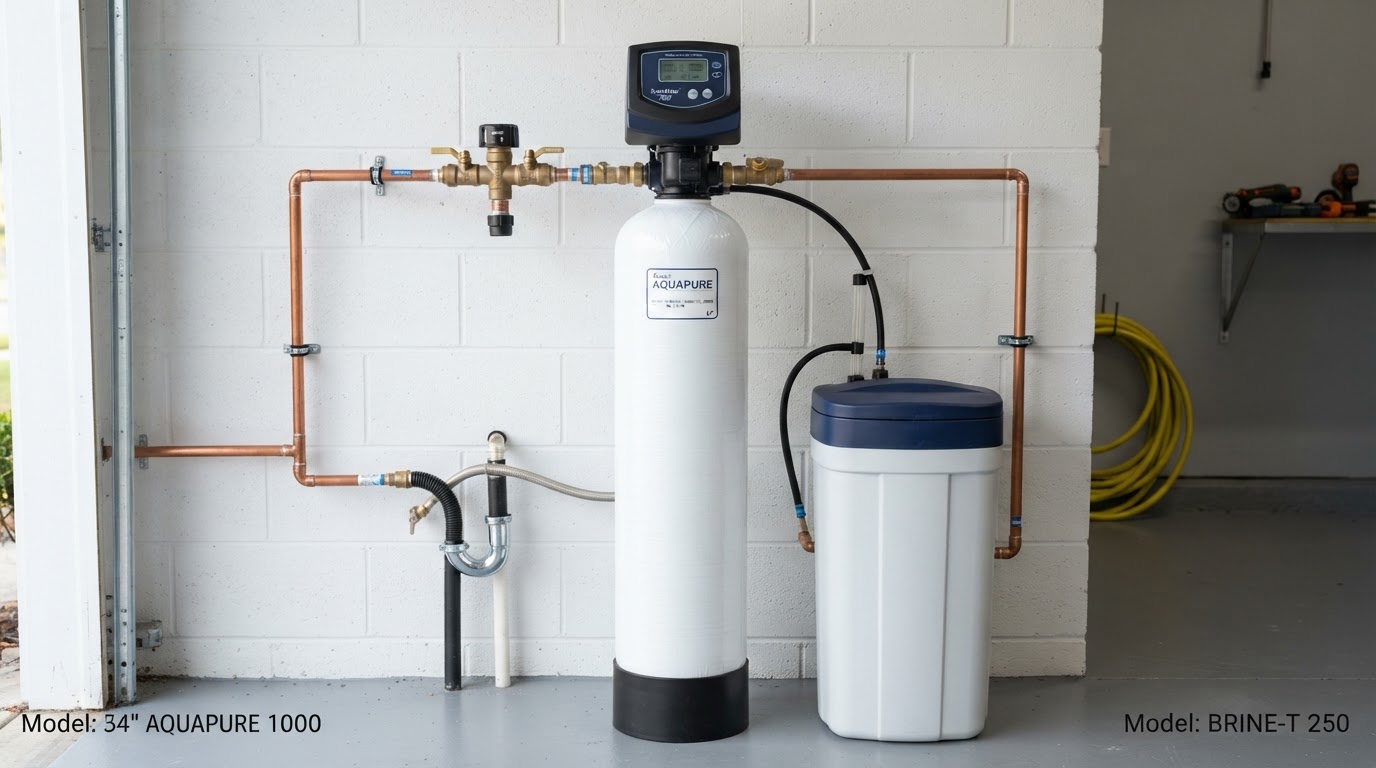
The Homeowner's Problem: The Softener Runs, but Hard Water Has Returned
Consider a homeowner in Westpark whose existing softener appears to cycle normally, yet mineral deposits have started returning around fixtures.
The homeowner wants to know whether the equipment needs a repair, new resin or complete replacement.
A running display or audible cycle does not confirm that the system is producing soft water. The first step is to measure performance and find the cause.
The Starting Setup
For this example, assume:
- The home has an existing ion-exchange softener
- The equipment model can be identified
- The valve, tanks and bypass are accessible
- The homeowner can provide some service history
- Assessment can be performed without immediate replacement
No equipment age, fault or hardness reading is assumed. Those details must come from the actual inspection.
The Assessment: Find Why Softening Performance Changed
Compare incoming and treated hardness using an appropriate hardness test. Record where samples were taken and when the system last regenerated.
Then review:
- Bypass position
- Salt supply and brine-tank condition
- Controller settings and error messages
- Changes in household demand
- Regeneration operation
- Brine draw and refill
- Drain-flow restrictions
- External leaks
- Equipment and service history
A TDS meter does not replace hardness testing.
The assessment should determine whether the issue involves operation, a component fault, media condition or more than one problem.
The Proposed Solution: Repair the Confirmed Fault
A targeted repair may be suitable when the equipment is otherwise serviceable and compatible parts are available.
For a Clack-controlled system, identify the exact valve family, controller and applicable manual before selecting parts. A similar-looking valve does not establish compatibility.
The proposed work might involve correcting settings, resolving a brine-system problem or replacing a confirmed faulty component.
Resin replacement should be considered only when the assessment supports it. Hard water returning does not, by itself, prove that the resin needs replacement.
Repair, Resin Replacement or Complete Replacement?
| Option | When to evaluate it | What the proposal should explain |
|---|---|---|
| Targeted repair | A specific operational or component fault is identified | Diagnosis, compatible parts, labor and post-repair checks. |
| Resin replacement | Media condition or performance supports replacement | Resin specification and quantity, tank condition, handling, disposal and startup. |
| Complete replacement | Equipment condition, parts availability or suitability makes repair less practical | New equipment scope, removal, plumbing changes and ongoing care. |
Compare the full scope of each option. Repairing one part may leave other worn components in service, while replacement may involve additional connection work.
Equipment, Parts and Tools
The work order should identify:
- Existing system and control-valve model
- Diagnosed fault
- Exact replacement components, if needed
- Compatible seals and service materials
- Resin type and quantity, if justified
- Any required distributor or tank work
- Disposal arrangements
- Testing and startup procedures
Tools may include a hardness test kit, pressure gauge and model-specific service tools.
Record actual part numbers after identifying the equipment. Do not order parts solely from a generic brand description.
How the Work Would Proceed
- 1
Confirm the reported problem.
Review symptoms, recent changes and service history. Measure hardness at appropriate sampling points.
- 2
Diagnose the equipment.
Check the bypass, settings, regeneration and brine-system operation using the applicable service instructions.
- 3
Present the findings and options.
Explain the confirmed fault, proposed repair and any reason to compare resin or system replacement.
- 4
Complete the authorized work.
Isolate and depressurize equipment as required. Fit compatible parts or replace media according to the applicable instructions.
- 5
Restore and check operation.
Follow the required startup or regeneration procedure. Inspect for leaks and confirm the repaired functions.
- 6
Verify softening performance.
Measure treated hardness at an appropriate point after the required operating sequence. Record the result and test conditions.
- 7
Explain follow-up.
Provide the completed work details, maintenance instructions and symptoms that warrant another call.
What the Estimate Would Include
| Estimate item | Scope to confirm |
|---|---|
| Assessment | Inspection, diagnostic work and any separate charge. |
| Replacement parts | Exact compatible components and quantities. |
| Repair labor | Work required to resolve the confirmed fault. |
| Optional resin replacement | Media, handling, disposal and associated tank work. |
| Startup and checks | Required cycling, leak checks and hardness measurements. |
| Additional work | Plumbing repairs or other faults discovered during assessment. |
| Taxes and exclusions | Itemized charges and work outside the proposal. |
Ask whether the assessment charge is separate or credited toward authorized work.
This example does not establish a fixed repair price. The actual model, diagnosis and work determine the proposal.
What Could Change the Estimate?
The scope may change if:
- More than one fault is found
- Parts are unavailable
- Tanks or connections are damaged
- Equipment access is restricted
- Previous modifications complicate servicing
- Media replacement requires additional internal parts
- The existing system no longer suits household demand
Additional work should be explained before proceeding.
The Intended Result and Follow-Up
The intended result is restored softening performance where the diagnosed condition can be corrected.
Completion records should identify the work performed, parts fitted, operational checks and measured hardness results.
This scenario does not claim an actual repair or supply invented readings.
Follow-up care should match the equipment. Check the appropriate salt supply, monitor operation and report leaks, error messages or renewed changes in performance.